

On this page
Why this site covers only FxPro
We are an FxPro introducing broker. Rather than pretend to rank dozens of brokers we have never used, we cover one broker in depth: how FxPro works for someone who lives in the UAE, where its rules differ from what you might expect, and what to ask before you deposit. If you open an account through our link, FxPro may pay us a commission. You pay no extra fee to us.
What “not licensed in the UAE” means in practice
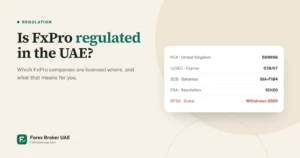
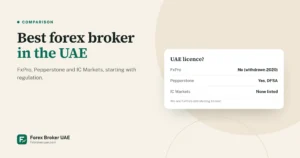
FxPro is regulated in the UK, Cyprus, the Bahamas and the Seychelles, but none of those licences comes from a UAE regulator. Since 1 January 2026 the federal regulator is the Capital Market Authority, which replaced the Securities and Commodities Authority. Inside the free zones, the DFSA supervises the DIFC and the FSRA supervises ADGM. FxPro had a DFSA-licensed company in Dubai until its licence was withdrawn in February 2020.
So if you open an FxPro account from the UAE, an overseas FxPro company holds it under that company’s rules. Complaints, compensation schemes and leverage limits follow that company’s regulator, not a UAE one. Our regulation guide lists the companies and how to check which one your client agreement names.
Costs a UAE resident should expect
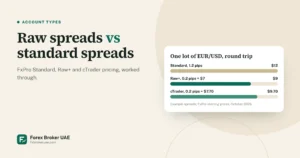
- Trading costs: on a Standard account the cost is in the spread (FX majors from 1.2 pips); on Raw+ the spread starts at zero and you pay $3.50 commission per side. Our spreads guide works through a full example in dollars and dirhams.
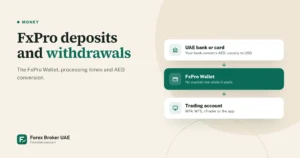
- Currency conversion: FxPro does not offer AED accounts. Your bank converts dirhams, usually to US dollars, and its rate is part of your cost.
- Funding fees: FxPro says it charges no deposit or withdrawal fees, but UAE and correspondent banks may charge for international transfers.
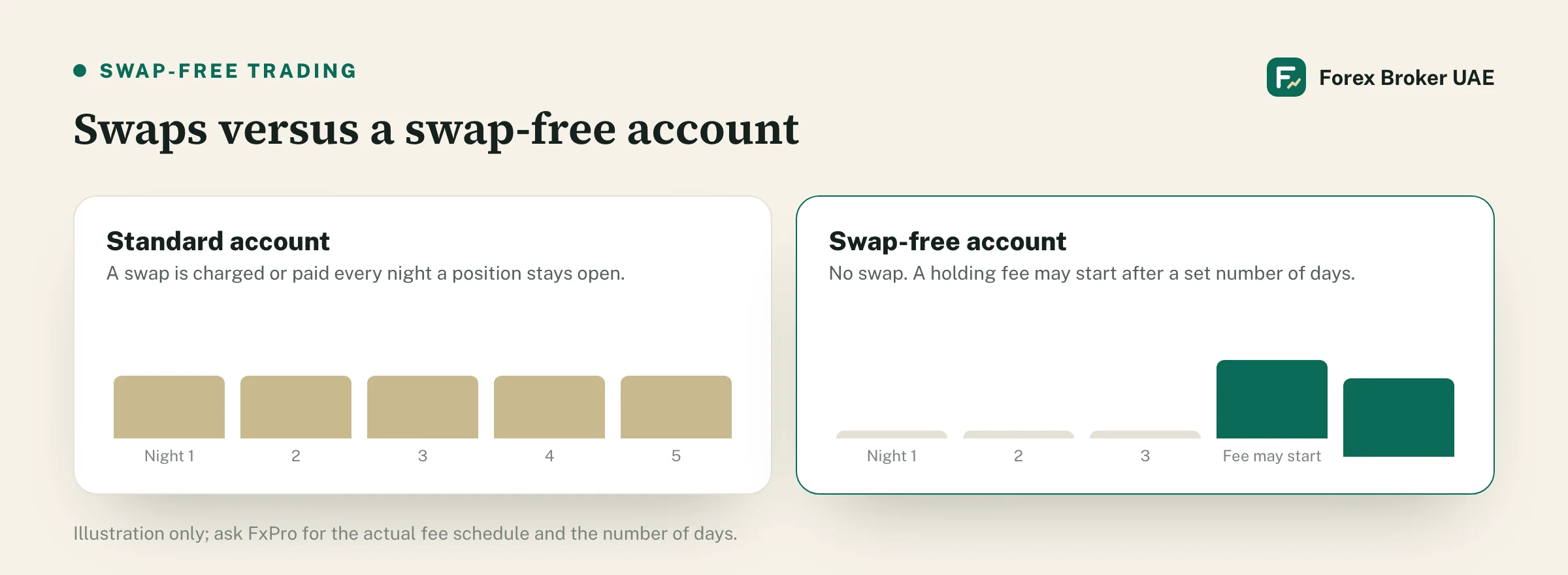
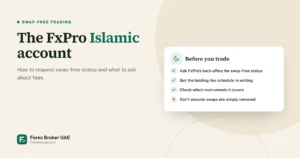
- Overnight swaps: charged on positions held overnight unless your account has swap-free status, which FxPro grants on request.
How to use this site
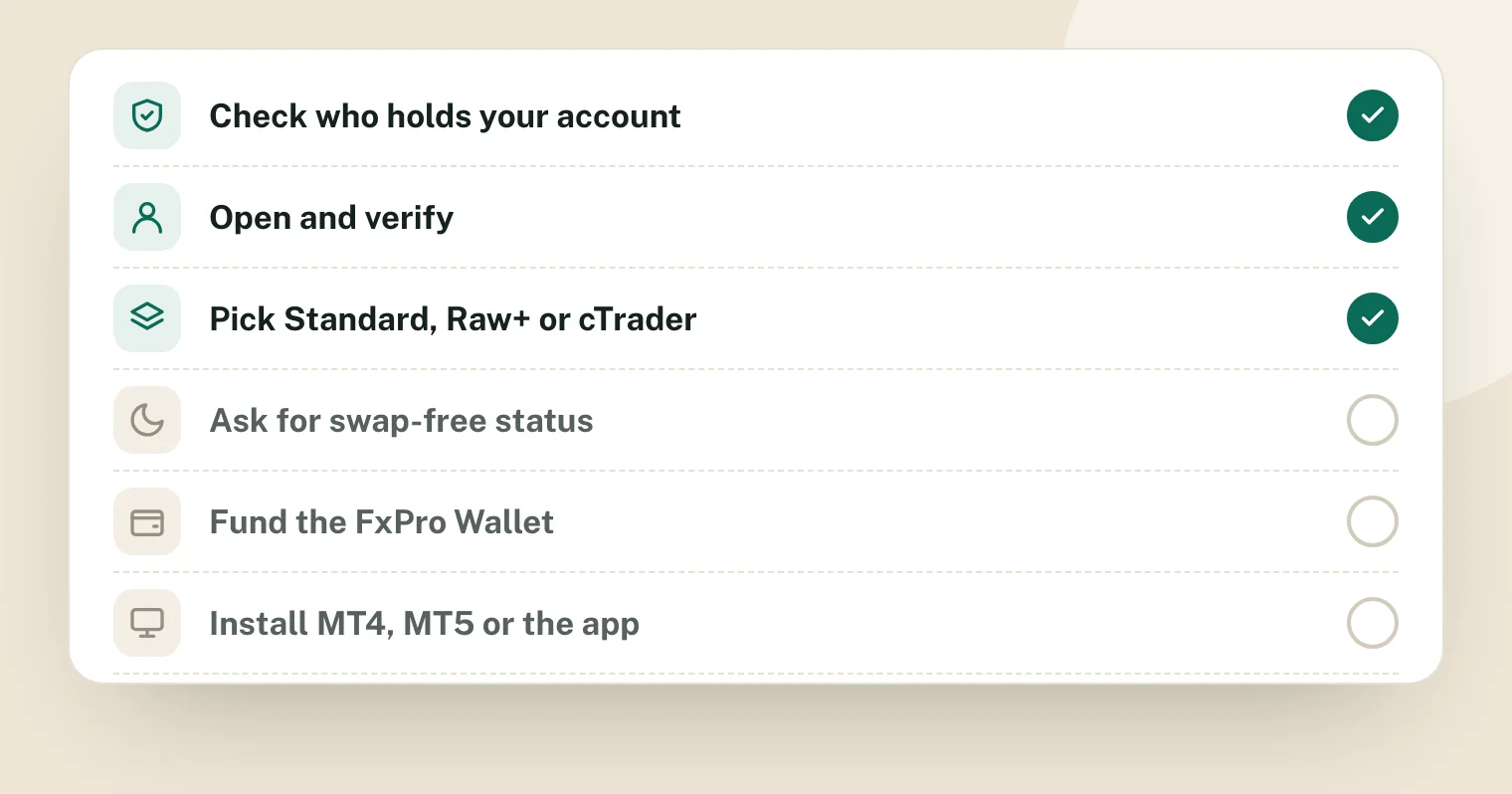
If you are new to FxPro, follow the six steps above in order. If you only need one answer, the guides are short and each one says when it was last checked. We write every guide from primary sources, mainly FxPro’s own pages and the regulators’ registers, and we list them at the end. How we research and check our work is explained on our About page.
Sources
Checked in October 2026. If something here no longer matches the source, tell us and we will correct it.